
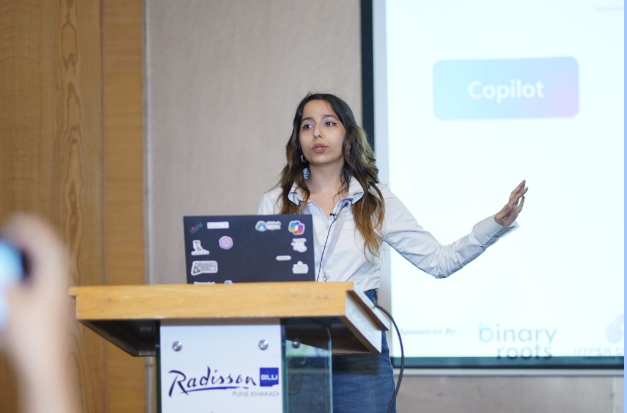
Saumya Smriti does not write code for a living. She still builds artificial intelligence, and a large enterprise now runs part of its daily work on a tool she made.
Smriti, a consultant at a global professional services firm in Pune, belongs to a group of Indian professionals reshaping who get to build technology. They are not software engineers. They are consultants, analysts and domain experts who have learned to build working AI using a new class of “low-code” tools, where the person describes what the software should do instead of programming it line by line.
Her flagship project is an AI assistant that a Fortune 500 client’s teams now use every day. A few years ago that kind of system would have needed a full engineering team and months of work. Smriti built it as a business expert who understood the problem, not as a programmer.
Away from her day job, she teaches. Nearly 10,000 professionals follow her courses and mentorship, many of them early-career workers and women moving into technology roles for the first time.
“You no longer need to be an engineer to build with AI,” Smriti said. “You need to understand the problem. That is opening technology to people who were locked out of it.”
The shift matters for India, where the conversation around AI has centred on job loss. Smriti pushes back on that framing. Most of the people she trains are not being replaced by the technology, she said. They are using it to move up.
“Five years ago, building an AI assistant that a large company depends on would have taken a full engineering team,” she said. “Now a single person who knows the business can do it. That changes who gets a seat at the table.”
Her students reflect that change. “A lot of the people I teach are women in corporate roles who were told technology was not for them,” Smriti said. “AI is their way in, not the thing taking their place.”
Smriti’s standing in India’s Microsoft and enterprise-AI community has grown alongside her teaching. She has spoken at industry events, judged national student hackathons where she evaluated dozens of teams, and been invited by senior technology experts to discuss how large organisations should adopt AI responsibly.
What she describes is a quiet redrawing of the map of who works in technology in India. For years the field belonged to those who could code. The new tools are handing a share of it to those who understand the work the code is meant to do.
“The barrier used to be the language of programming,” Smriti said. “That barrier is falling. What is left is whether you understand the real problem well enough to solve it.”